






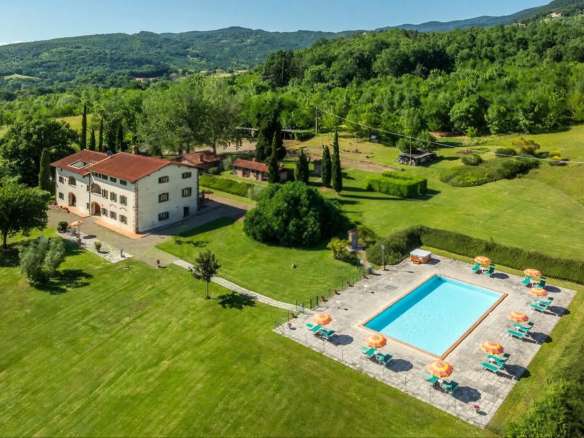


Understanding Agriturismo Properties in Italy
An agriturismo combines an agricultural estate with rural hospitality, offering guests the opportunity to experience the Italian countryside, local food and traditional farming life. Properties may include guest accommodation, an owner’s residence, farmland and buildings used for agricultural or hospitality activities.
Some properties are established businesses with the necessary authorisations already in place, while others are farms, country estates or restoration projects that may be suitable for conversion. Buyers should not assume that every farmhouse can automatically be operated or advertised as an agriturismo.
Typical Agriturismo Properties
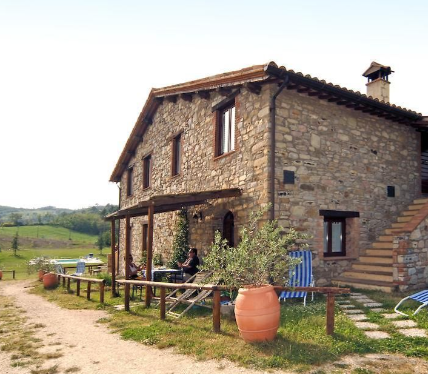
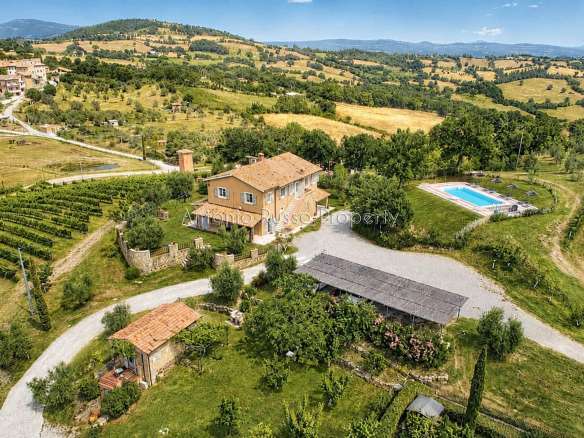
Agriturismo properties vary considerably in size and character. A small operation may offer several guest rooms or self-contained apartments within a restored farmhouse. Larger estates can include multiple buildings, a restaurant, commercial kitchen, swimming pool and facilities for weddings, retreats or other events.
Common features include:
- A principal farmhouse with private or guest accommodation
- Independent apartments, suites or holiday cottages
- Barns, stables, cellars and agricultural outbuildings
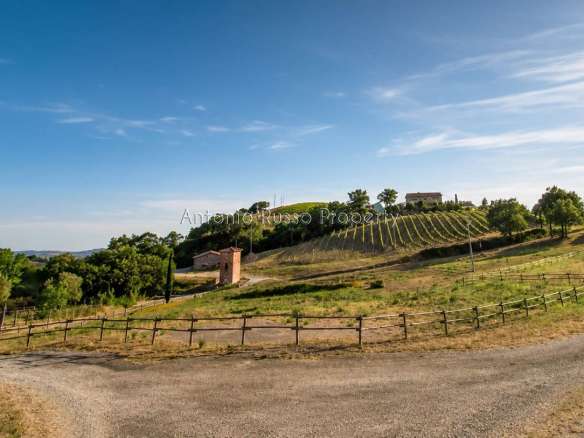
- Olive groves, vineyards, orchards or arable land
- Woodland, grazing land and landscaped gardens
- Swimming pools, terraces and outdoor dining areas
- Restaurants, breakfast rooms or commercial kitchens
- Agricultural equipment, storage buildings and workshops
Some estates continue to produce olive oil, wine, fruit, vegetables, cheese or other regional products. Others may offer activities such as cookery classes, wine tasting, horse riding, farm tours or guided walks, subject to the appropriate permissions.
Popular Regions for Agriturismo Properties
Agriturismi can be found throughout Italy, although the architecture, landscape and type of agricultural activity vary between regions.
Tuscany and Umbria are particularly known for stone farmhouses, vineyards, olive groves and estates overlooking historic hill towns. Le Marche and Abruzzo offer rolling countryside, mountain scenery and rural properties within reach of the Adriatic coast.
In Piemonte, agriturismo estates are often associated with vineyards, wine production and the landscapes of Langhe, Monferrato and Roero. Emilia-Romagna combines productive farmland with culinary tourism and convenient access to historic cities.
Southern regions such as Puglia and Sicily offer masserie, bagli and other traditional rural estates surrounded by olive trees, vineyards or orchards. These regions can also provide opportunities to combine countryside hospitality with access to the coast.
Agriturismo Lifestyle and Business Potential
Owning an agriturismo can provide a lifestyle closely connected to the countryside, local traditions and seasonal agriculture. It may appeal to buyers seeking a permanent rural home, an established hospitality business or an estate where agricultural and tourism activities can be developed together.
Operating an agriturismo requires more than maintaining guest accommodation. Owners may need to manage farming activities, reservations, cleaning, food service, staffing, gardens, swimming pools and extensive areas of land. Demand can also vary considerably by location and season, so any projected income should be examined against the property’s previous trading figures, operating costs and local tourism patterns.
Buying an Existing Agriturismo
When purchasing an established agriturismo, buyers should determine exactly what is included in the sale. The property, agricultural land, business, company, equipment, website, booking accounts and licences may not all form part of the same transaction.
Professional checks should cover:
- Ownership and boundaries of the land and buildings
- Planning permission and cadastral compliance
- The permitted use of guest rooms, apartments and outbuildings
- Agricultural and agriturismo registrations
- Accommodation, catering and food-production authorisations
- Fire safety, accessibility and swimming-pool requirements
- Water supplies, wells, irrigation rights and wastewater systems
- Access roads, parking and rights of way
- Existing employees, supplier agreements and future reservations
- Business accounts, occupancy records and operating expenses
Licences and registrations should be checked carefully because they may depend upon the operator, agricultural activity and rules of the individual region. Buyers should confirm whether existing permissions can be transferred or whether new applications will be required.
Converting or Renovating a Rural Estate
A farmhouse with land may have the appearance and potential of an agriturismo without having the legal status required to operate as one. Before buying a conversion project, it is important to establish whether the proposed hospitality use is allowed and whether the agricultural activity would meet regional requirements.
Renovation costs can extend beyond the restoration of the main house. Roofs, access roads, drainage, utilities, septic systems, retaining walls, agricultural buildings and swimming pools may all require investment. Historic or protected buildings can also be subject to restrictions governing extensions, materials and external alterations.
An architect or geometra should check the planning history and condition of every building, including barns, cellars and structures that may appear suitable for guest accommodation. A commercial adviser familiar with agricultural and hospitality businesses can then help assess the legal structure, taxation and realistic operating costs.
Whether searching for a working farm, an established hospitality business or a countryside estate with conversion potential, agriturismo properties offer a distinctive way to experience rural life in Italy while preserving the land, buildings and agricultural traditions of the surrounding area.