







Understanding Masserie in Italy
A masseria is a traditional fortified farmhouse or rural estate associated particularly with Puglia in southern Italy. Originally developed as centres for agricultural production, these substantial properties often combined the landowner’s residence, workers’ accommodation, livestock areas, storage buildings and defensive features within a single estate.
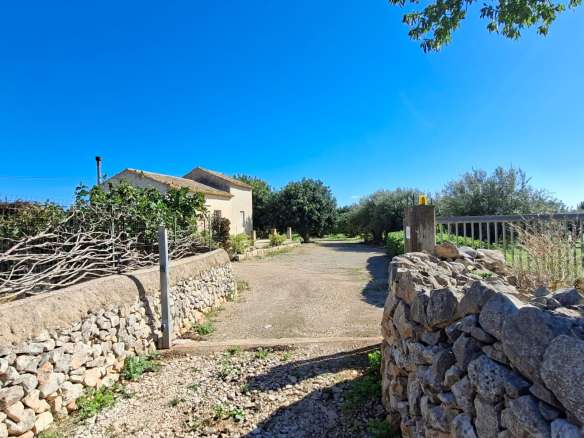
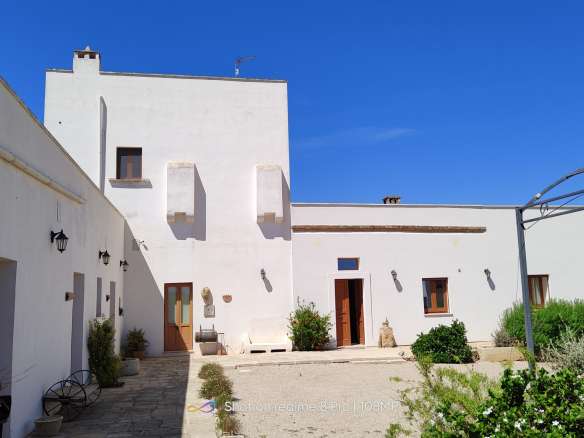
Today, masserie range from carefully restored private homes to working farms, boutique hotels and extensive renovation projects. Their pale stone walls, enclosed courtyards, vaulted interiors and surrounding olive groves make them one of southern Italy’s most distinctive property types.
Traditional Masseria Architecture
Masserie were designed to support rural life and agricultural production, often in relatively isolated countryside. Many were built around a protected central courtyard and gradually expanded as the farm developed.
Typical features may include:
- A substantial principal residence
- High external walls and fortified entrances
- Internal courtyards and covered walkways
- Barrel-vaulted or star-vaulted ceilings
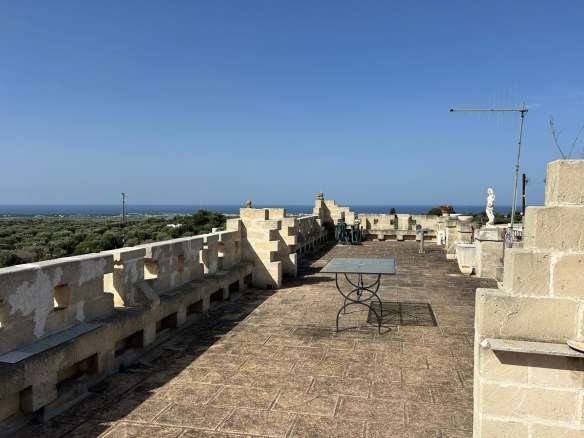
- Stone staircases and roof terraces
- Defensive towers or lookout points
- Private chapels
- Stables, barns and animal shelters
- Olive presses, wine cellars and storage rooms
- Workers’ cottages and guest buildings
- Wells, underground cisterns and irrigation systems
- Olive groves, vineyards, orchards and arable land
Not every masseria contains all these elements. Some are compact fortified farmhouses, while others form complete rural complexes containing numerous buildings and extensive land.
Where to Find Masserie
Puglia contains the greatest concentration and variety of masserie. Their design and surrounding landscape change considerably between different parts of the region.
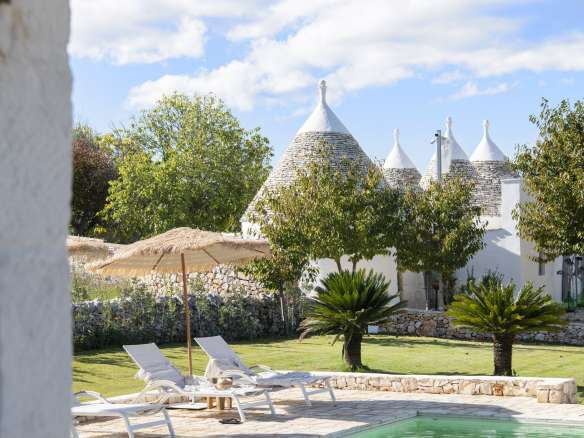
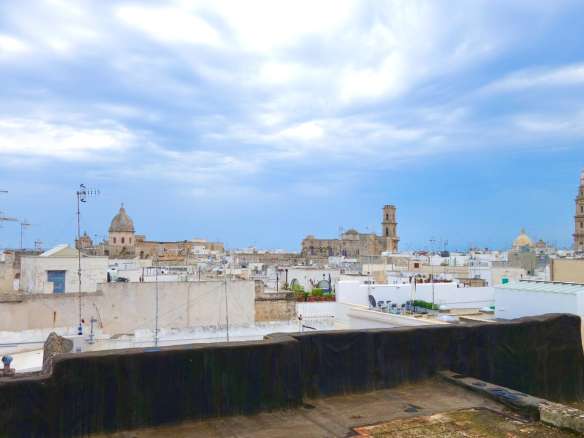
The Valle d’Itria, including Ostuni, Ceglie Messapica, Martina Franca, Cisternino and Locorotondo, is known for white stone buildings, olive groves and masserie that sometimes incorporate trulli.
The countryside of the Province of Brindisi includes traditional estates within reach of the Adriatic coast, Ostuni and Brindisi Airport. Properties around Carovigno, San Vito dei Normanni and Fasano range from smaller restoration projects to established hospitality businesses.
The Province of Lecce and the wider Salento peninsula offer masserie constructed from warm local stone, often surrounded by olive groves and within reach of both the Adriatic and Ionian coasts.
The Province of Bari includes masserie near Monopoli, Polignano a Mare and the inland countryside, while the Province of Taranto offers rural estates between the Valle d’Itria and the Ionian coast.
Masserie and comparable fortified rural estates can also be found in neighbouring parts of Basilicata and elsewhere in southern Italy, although the term remains most closely connected with Puglia.
Living in a Masseria
A restored masseria can provide extensive living space, privacy and a close relationship with the surrounding land. Thick stone walls and vaulted rooms create interiors with substantial architectural character, while courtyards and roof terraces support outdoor living during Puglia’s long warmer seasons.
The size and rural position of these properties also bring practical responsibilities. Gardens, olive groves, private roads, swimming pools and multiple buildings require regular maintenance. Larger estates may need a resident caretaker, gardener or agricultural contractor.
Buyers planning permanent residence should consider the distance from shops, healthcare and other daily services. Internet connectivity, mobile coverage, road conditions and year-round access should also be checked.
Buying a Masseria
Masserie often consist of several buildings constructed or altered over different periods. Detailed due diligence is therefore essential to confirm the legal status and permitted use of every part of the estate.
Professional checks should cover:
- Legal ownership and land boundaries
- Planning and cadastral compliance
- Authorised use of each building
- Rights of way and private-road access
- Condition of roofs, vaults, walls and foundations
- Wells, cisterns and registered water rights
- Electricity, heating and wastewater systems
- Condition and classification of agricultural land
- Heritage and landscape restrictions
- Rights affecting neighbouring farmers or tenants
- Legality of swimming pools and external structures
- Conversion potential of barns and agricultural buildings
A room currently presented as accommodation may still be officially registered for agricultural or storage use. Buyers should not assume that all existing spaces can legally be occupied or rented to guests.
Restoring a Masseria
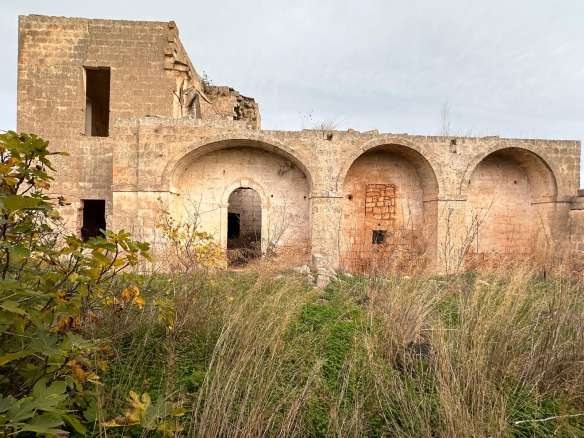
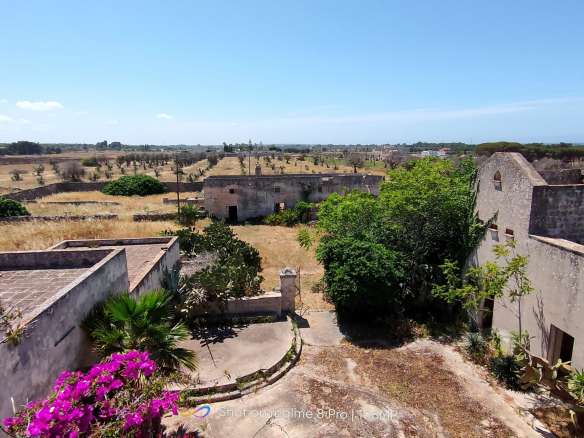
An unrestored masseria can provide an opportunity to preserve a significant piece of Puglian heritage, but renovation requires specialist knowledge and a realistic budget.
Traditional stone buildings may need work to:
- Vaulted roofs and waterproofing
- External stonework and lime-based finishes
- Foundations and structural walls
- Damp protection and drainage
- Windows, doors and shutters
- Electrical and plumbing systems
- Heating, cooling and hot-water provision
- Wells, cisterns and wastewater systems
- Courtyards, terraces and boundary walls
- Access roads and landscaping
Historic or protected buildings may be subject to restrictions governing materials, rooflines, openings and external alterations. New extensions, swimming pools and changes to agricultural buildings may also require specific permission.
An architect, engineer or geometra with experience of masseria restoration should inspect the entire complex and confirm what work is permitted before purchase.
Land, Olive Groves and Agricultural Use
Many masserie are sold with olive groves, vineyards, orchards or arable land. The condition and management requirements of this land should be assessed separately from the buildings.
Buyers should establish:
- The number and condition of olive or fruit trees
- Whether the land is actively cultivated
- Access to water and irrigation
- Existing agricultural leases or agreements
- Access for tractors and other machinery
- Farming equipment included in the sale
- Restrictions affecting trees and landscape features
- The likely cost of ongoing maintenance
An attractive olive grove requires regular pruning, treatment and harvesting. Buyers not intending to farm directly may need to arrange management through a local agricultural contractor.
Masserie as Hotels or Agriturismo Businesses
Restored masserie are frequently used as boutique hotels, wedding venues, restaurants, retreats and agriturismo businesses. Their courtyards, extensive land and separate buildings can be well suited to hospitality, but commercial use is subject to planning, licensing and safety requirements.
When purchasing an established business, buyers should verify whether the sale includes:
- The buildings and agricultural land
- The operating company
- Hospitality and catering permissions
- Furniture, equipment and commercial kitchens
- The business name, website and booking accounts
- Existing staff and supplier contracts
- Future reservations and customer deposits
- Agricultural activities connected with agriturismo status
Owning a masseria with land does not automatically provide the right to operate an agriturismo, hotel, restaurant or event venue. The authorised use, existing licences and transfer arrangements should be checked with appropriate legal and technical advisers.
Whether intended as a private residence, working agricultural estate or hospitality business, a masseria offers a distinctive combination of architecture, land and southern Italian history. Careful investigation of the buildings, planning status, services and agricultural responsibilities is essential when choosing a property suited to long-term ownership.