






Property for Sale in Rome, Lazio
The area around Italy’s capital is formally the Metropolitan City of Rome Capital, which replaced the old Province of Rome in 2015. It runs from the Tyrrhenian coast at Fiumicino and Fregene across the Roman Campagna to the Alban Hills, the Sabine hills and the edge of the Apennines, with the city of Rome at its centre.
The property on this site is concentrated in the city itself and sits firmly at the upper end of the market. Period apartments in central districts make up the majority of homes, alongside villas with gardens in the residential quarters and on the edges of the city, and almost everything is priced above €1 million.
The Historic Centre
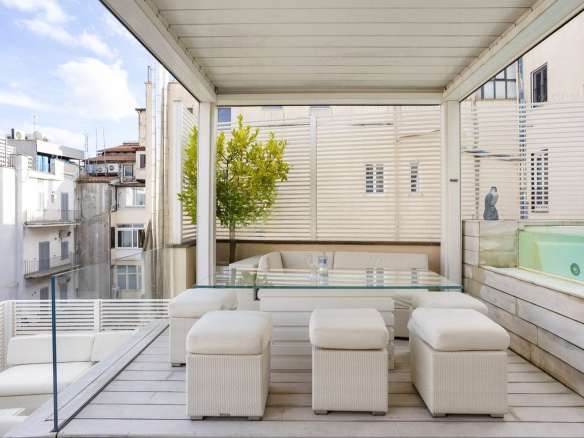
The historic centre of Rome, a UNESCO World Heritage Site, lies within the Aurelian Walls on both sides of the Tiber. Around the Pantheon, Piazza Navona and Campo de’ Fiori, apartments are found in palazzi dating from the Renaissance to the nineteenth century, often with high ceilings, beamed or frescoed rooms and, at the top of the market, terraces looking over the rooftops and domes.
Monti, between the Forum and Santa Maria Maggiore, is one of the oldest residential quarters, with small streets of shops and restaurants. The streets around the Spanish Steps and Via del Corso include some of the city’s most expensive addresses. Buyers should expect lifts to be small or absent in older buildings, parking to be scarce and the centre to be covered by a restricted traffic zone.
Trastevere, the Aventine and Testaccio
Across the Tiber, Trastevere keeps its medieval street plan and a lively neighbourhood life around Santa Maria in Trastevere. Apartments here range from compact flats to large homes with roof terraces, and the Gianicolo hill above offers views over the whole city.
The Aventine, one of the seven hills, is a quiet residential area of villas, gardens and churches, including the Orange Garden and the keyhole view of St Peter’s from the Knights of Malta. Testaccio, below it, is a traditional working district with a well-known food market and more ordinary apartment buildings.
Parioli, Pinciano and the North of the City
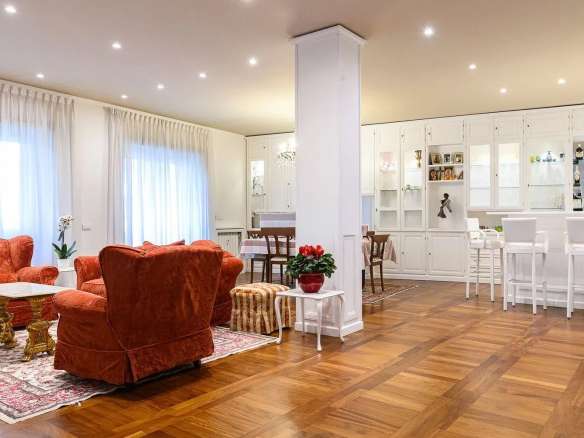
North of the Villa Borghese park, Parioli and Pinciano are elegant residential districts built mainly in the early and mid twentieth century. They offer large apartments in well-kept buildings, often with porters, balconies and garages, and some detached villas with gardens. Embassies and international schools are close by, which makes the area popular with families relocating to Rome.
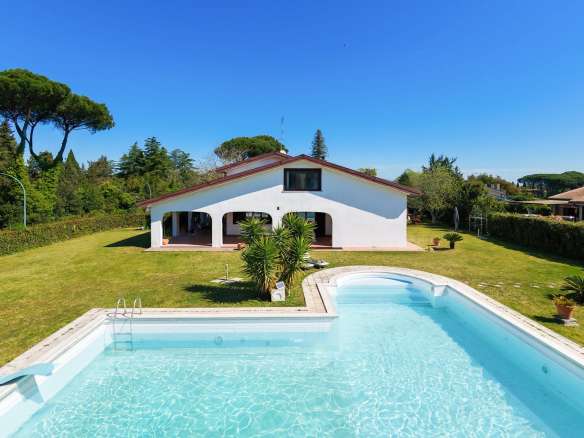
Further north, the Flaminio, Vigna Clara and the districts along the Via Cassia offer newer apartment blocks and villas in green surroundings. Beyond the ring road, residential estates such as Le Rughe, near Formello, provide gated villas with gardens and pools, a world away from the density of the centre.
The Appian Way and the Wider Metropolitan Area
South-east of the walls, the Appia Antica regional park protects the ancient Appian Way with its tombs, catacombs and aqueducts. Villas along and near the old road are among the most sought-after country homes within the city, set on large plots with Roman pines and open views.
Beyond the city boundary, the metropolitan area includes the Castelli Romani in the Alban Hills, with Frascati and its white wines and Castel Gandolfo above Lake Albano, as well as Tivoli with Hadrian’s Villa and the Villa d’Este. Towns such as Fonte Nuova and Fiano Romano to the north-east and Colonna, below the Alban Hills, offer houses and villas closer to the countryside, while Fregene, on the coast near Fiumicino, is a seaside resort set in a pine wood.
Property and Lifestyle in Rome Province
Rome offers everything expected of a major European capital: international schools, universities, hospitals, embassies, theatres, and some of the world’s most important museums and churches, including the Vatican Museums and St Peter’s. Daily life in the central districts revolves around local markets, cafés and neighbourhood restaurants, much of it within walking distance.
Roman cooking is built on simple dishes such as carbonara, cacio e pepe, amatriciana and artichokes prepared in the Roman or Jewish style, and the Castelli Romani produce the wines traditionally served in the city’s trattorias. Weekends can be spent at the beaches of the Lazio coast, the lakes of Bracciano and Albano or the Apennine mountains to the east.
Demand for short-term lets is strong across the centre, but rules on holiday rentals in Rome have been tightened and are subject to change. Buyers who plan to let should check the current registration requirements and any building rules before purchase.
Airports and Transport Connections
Rome Fiumicino (Leonardo da Vinci) is Italy’s largest airport, with direct flights to the UK, Ireland, North America and much of the world. Rome Ciampino, on the south-eastern side of the city, handles mainly low-cost European flights. Both are linked to the city by rail or bus.
Roma Termini and Roma Tiburtina are the main stations, with high-speed trains to Florence, Milan, Naples and Venice. The Grande Raccordo Anulare ring road circles the city and connects with the A1 motorway to Florence and Naples, the A24 towards L’Aquila and the Adriatic, and the A12 along the coast towards Civitavecchia. Within the city, the metro, trams and buses serve most central districts, although a car is useful for villas outside the centre.
Buying and Renovating Property in Rome Province
Most central properties are apartments in shared buildings, so ask for the condominium rules, the minutes of recent meetings and details of any planned works on facades, roofs or lifts, which can be costly. Check the annual service charges and what they include.
Before signing, have a local surveyor (geometra) confirm that the apartment matches its cadastral and planning records. Internal changes made over the years, such as added mezzanines, enclosed terraces or bathrooms, are common in older Roman buildings and must be regularised before the sale. Many buildings in the centre are listed or fall under heritage controls, which limit changes to facades, windows and roof terraces.
The historic centre and several other districts are inside restricted traffic zones, so check access, parking or garage rights and any permits that come with the property. For villas, confirm the planning status of pools, annexes and extensions, and the boundaries and access rights of the plot.
From palazzo apartments near the Pantheon and in Trastevere to family homes in Parioli and villas along the Appian Way, Rome offers a choice of high-end city property in one of the world’s great historic capitals, with international flights from two airports on its doorstep.